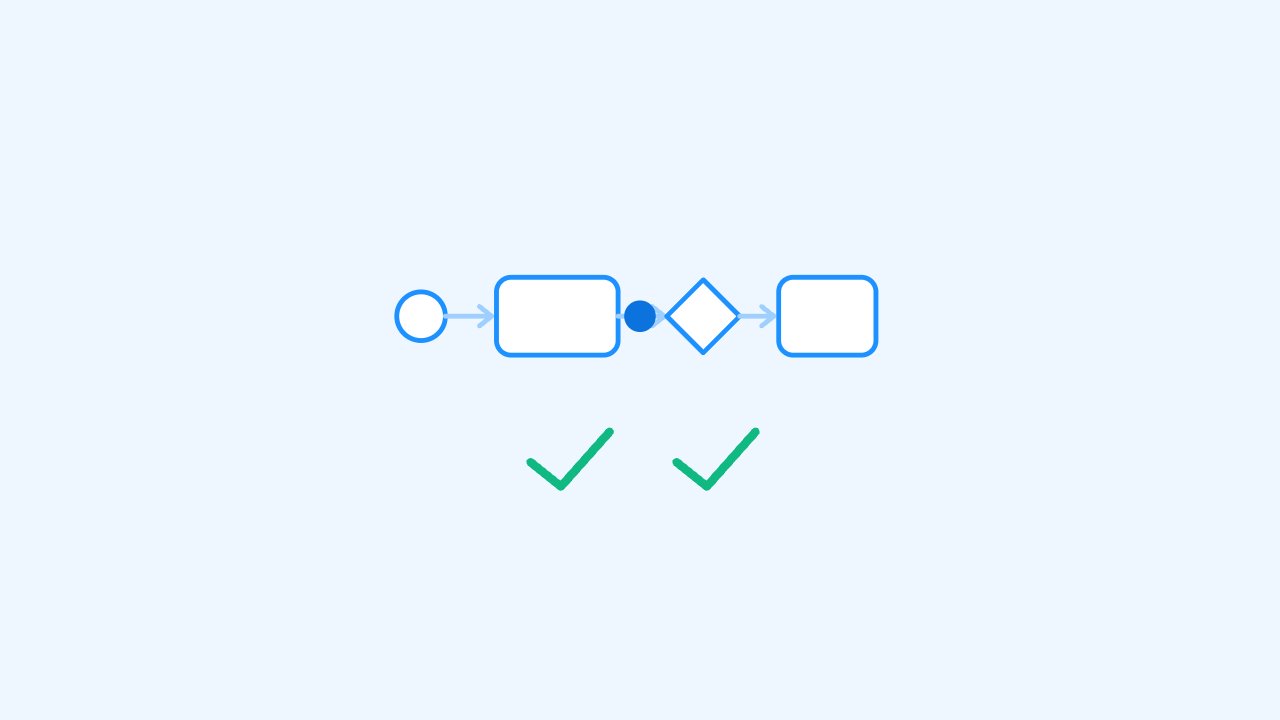
Episode 2 · March 26, 2026 · Hosted by Sebastian
Is Your Diagram Actually Correct? Structural Validation & Token Simulation
Four hidden BPMN traps you only catch when you run the process, not when you look at it: the silent multi-merge, fake decisions from the wrong gateway type, implicit parallelism, and non-terminating live loops. Plus why interrupting and non-interrupting events behave so differently, and why token simulation is the real quality gate.
Your diagram looks correct. But is it actually correct?
The big takeaway
A diagram can look perfect and still be logically broken.
If you don't simulate it, you're not validating behaviour, you're just reviewing shapes.
What we walked through
- 01
The silent multi-merge
A parallel split without a proper join duplicates your entire flow. It looks fine in review, but suddenly you're sending two interview invites, two rejections, two of everything. Token simulation exposes it instantly: if you see two tokens, something's off.
- 02
Fake decisions from the wrong gateway type
Using an exclusive gateway where you're actually waiting for external events, like a candidate reply or time passing, implies control where there is none. Switch to an event-based gateway: from "we decide" to "we react".
- 03
Implicit parallelism
Two outgoing flows from a task are a hidden parallel gateway. BPMN allows it, but humans miss it, and the result is unintended loops, duplicate paths or even endless executions. Rule of thumb: never split without an explicit gateway.
- 04
Non-terminating live loops
Small modelling oversights can create flows that never end. You won't catch this in a quick visual review, but the token simulator will either loop forever or behave unexpectedly.
- 05
Cancellation semantics are subtle but critical
A dashed or solid event border completely changes behaviour. Non-interrupting (dashed) runs in parallel and the main flow continues. Interrupting (solid) stops the process. We also discussed when to use process-wide cancellation, boundary events or scoped subprocesses.
Discuss this episode
Ask a question, share how you would model it, or suggest the next topic.
More episodes
All episodes →
BPMN Meets AI: How to Bring AI Into Operations
A playbook for bringing AI into operations with BPMN. We took a sales qualification process and found two agent opportunities, a pre-qualification scorecard and a business case generator, scoped what each needs, built human review into the to-be, and used time-per-task attributes to decide which pilot to build first.

5 Reasons Your Process Initiative Gets Stuck
The five reasons process initiatives stall before you even start modelling: wrong scope, missing stakeholder buy-in, process isolation, ignoring variance, and jumping to solutions.
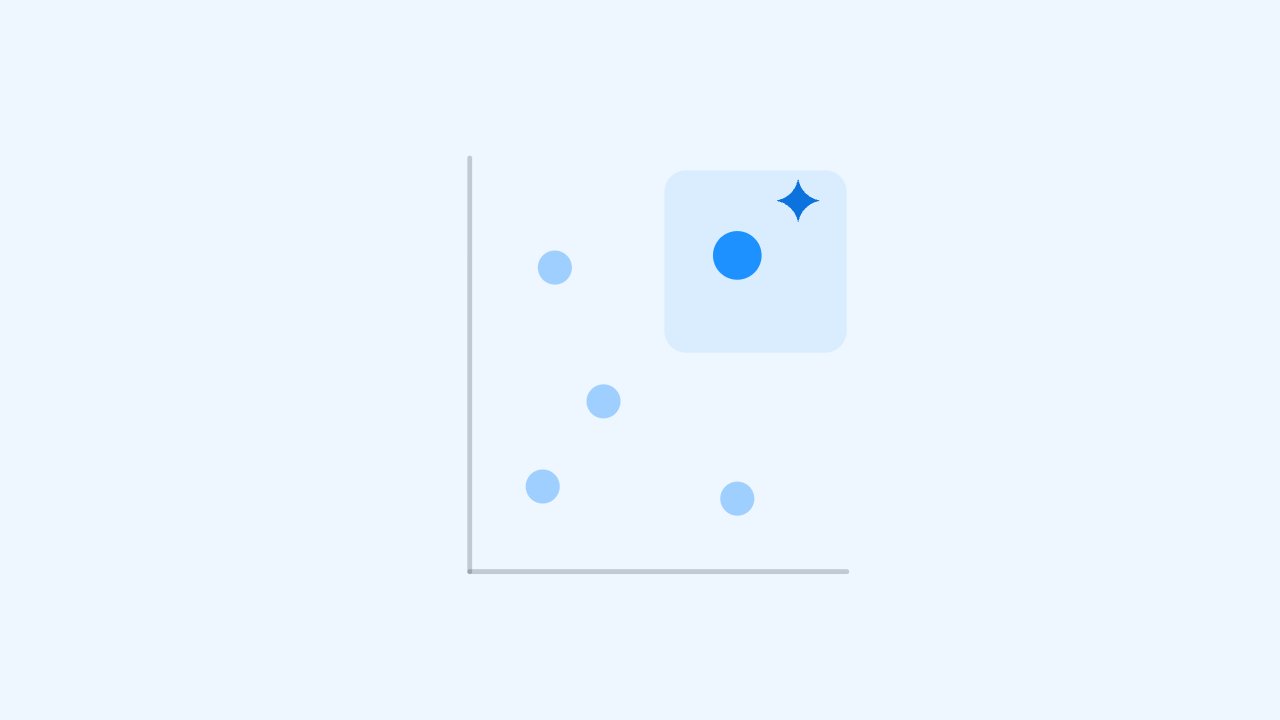
Where Should AI Go First? Prioritizing Processes and Tasks With Attributes
How to prioritise AI initiatives from your process models instead of case by case. We ran two passes: on the process level, two simple attributes and a filter produced a shortlist; on the task level, value potential against feasibility picked the first initiatives. In our example that left five concrete opportunities.